


Por FERNANDO TAGLE VALLE
La tecnología se ha convertido en una piedra angular de la guerra moderna, impulsada por los avances en potencia de fuego, sensores, comunicaciones, sistemas cibernéticos e inteligencia artificial. Especialmente en el ámbito marítimo, se ha convertido en un elemento importante del carácter cambiante de la guerra, influyendo directamente en las estrategias de disuasión. Los submarinos, con sus avanzadas capacidades, su sigilo y letalidad, demuestran de forma evidente cómo las innovaciones tecnológicas reafirman la credibilidad de la autodefensa de una nación.
Technology has become a cornerstone of modern warfare, driven by advances in firepower, sensors, communications, cyber systems, and AI. Particularly within the maritime domain, it has become an important element of the changing character of war, directly influencing deterrence strategies. Submarines, with their advanced capabilities, stealth, and lethality, perfectly illustrate how innovations in technology boost a nation’s self-defence credibility.
In a society where adapting to change has become an essential element for success, technology has emerged as a crucial component of the changing character of war. It has contributed to the development of more accurate sensors, new forms of communication, increased firepower, and the incorporation of cyber systems and artificial intelligence (AI). Within this context, the present essay will explore the relationship between war and technological innovation, recognising the influence of the latter on the formulation of modern strategy. With a focus on the maritime1 domain and using submarines as a case-study example, it will analyse how deterrence - as a strategic choice - is impacted by advances in technology, thereby increasing a state’s self-defence credibility.
Strategy, defined by Clausewitz as ‘the employment of the battle as the means towards the attainment of the object of the war’ (1997, p. 141), has moved beyond its traditional ‘military’ understanding, connecting not only with tactics but also with politics. As Strachan (2013) indicates, modern strategy is not located ‘in the art of the commander but in the links which tie war to policy’ (p. 58). To some extent we could say that this perception of modern strategy has ‘closed the gap’ with grand strategy, whose role is to manage and command all the means of a nation or international body to fulfil the political object defined in the war (Milevski, 2014).
When talking about war, it is important to understand what it represents for the political aim of a state. It is not merely an act of violence, but rather ‘a political instrument, a continuation of political commerce, a carrying out of the same by other means’ (Clausewitz, 1997, p. 22). Consequently, the changing character of war does not refer exclusively to military actions on the battlefield, but also to significant shifts in ‘technology, societal expectations and culture, geostrategic dynamics, doctrine, economics, trade and even history’ (Roncolato, 2022). War in a given age is thus the result of a wide range of dynamics, all of which are essential when shaping a state’s political objectives.
In an era characterised by globalisation and international alliances, unlimited wars with unrestricted use of force are uncommon. Modern strategy principally deals with non-vital conflicts and limited wars determined by distance, geography, space, temporal considerations, and available assets, integrating the dynamics of change as permanent factors. As Gat (2011) suggests, to understand these dynamics it is important to recognise three historical and globally interconnected processes: modernisation, democratisation and technological innovation.
Particularly regarding technological innovation, thirty years ago, a group of U.S. strategists, theorists and military thinkers suggested that technological improvements in warfare systems, battlespace knowledge and communications would enhance joint operations, thereby creating new political-military possibilities (Owens, 2002). These improvements in advanced sensors, communications and long-range precision weapons led to a transformative process known as the ‘Revolution in Military Affairs’ (RMA), ‘brought by the innovative application of technologies which, combined with dramatic changes in military doctrine and operational concepts, fundamentally alters the character and conduct of operations’ (Hennessy and Jinks in Till, 2018, p. 170).
Recognising this process as a global trend, certain naval scholars have adopted its fundamental concepts, alternatively referring to it as a ‘Revolution in Naval (or Maritime) Affairs’. Navies worldwide have evolved their operations to combine ‘air, surface, and submarine components in much more flexible structures’ (Owens, 2002, p. 59), utilising comprehensive communications systems and operating as part of joint forces to face international and regional challenges. Consequently, their structure, roles, and strategic significance have been profoundly shaped by advances in technology. As Till (2018) synthetises, ‘navies are material services’ (p. 154) and the impact of technological improvements can be seen in three major areas: platforms, warfare systems and information technology (IT).
Concerning platforms, technological advances have a major impact on the decisive characteristics of naval assets, including their situational awareness, firepower, manoeuvrability and resilience. Regarding warfare technologies, developments in systems, weapons, and sensors have emerged as a critical factor in determining the primary characteristics of maritime operations. With respect to IT, since ‘knowledge is power (and) the more power you know, the more you will win’ (Till, 2018, p. 165), innovations have been revolutionary, establishing information superiority as crucial for operational success.
Rear Admiral USN Davids’ perspective helps to illuminate the relevance of technology in today’s challenges. As he indicates, ‘we have to think about how we evolve… and think about our legacy systems and platforms that served us very well in a certain operating environment (but) that may or may not have utility going forward’ (Olay, 2024). This tendency to place emphasis on technological developments is evident not only among NATO allies but also in states like Russia, China, Iran and North Korea, demonstrating that globally this is not merely a process; it is a military transformational race2 to achieve technological advantage, driven by the understanding that what has worked in the past and works in the present may not be useful in the future.
Strachan and Scheipers (2011) indicate that there is a ‘tendency of strategic thinkers and strategy makers to integrate new technologies into established concepts’ (p. 19), recognising that their impact on war does not affect the operational culture and theoretical norms of armed forces. From this perspective, strategy takes precedence over technology and its enabling capacities, thereby separating technological innovation from the strategic levels of war. Thus, it could be argued that 21st century technological improvements in communications (SATCOM, encryption protocols, high-frequency), firepower (lethality, range and accuracy) and weapon systems (advanced sensors, autonomous guidance and unmanned systems), do not influence the formulation of strategy.
Under this approach, the presence or absence of these technologies and capabilities does not limit a state’s capacity to build its own strategy for self-defence purposes. Following the interpretation of modern strategy, this perspective is, at the very least, arguable. Strategy gives a goal to the entire military action, establishing the plan of the war and serving as a process for dealing with complex environments. As Freedman (2006) indicates, strategy is a choice that goes beyond long-term planning, being more than a simple link between war objectives and the available means. Furthermore, in the process of military transformation, technological innovation is directly linked with one of the main strategic choices to protect sovereignty and prevent armed conflicts from happening: deterrence.
The orientation of deterrence is to create and maintain a condition of peace, discouraging an enemy from using force as a political alternative. Therefore, it operates at a psychological level, leading a potential adversary to avoid the risks and damages of war through inaction (Thauby, 1999). Deterrence is a crucial and enduring strategy of international politics that incorporates three main elements: credible military capabilities (in terms of available means); the political will and resolve to use force and all the existing capabilities; and the ability to effectively communicate these elements to potential enemies (Romero, 2024). As Morgan (2012) indicates, in the early 20th century, deterrence shifted from a classic system of accumulated power to persuade potential enemies that the cost and risk of an eventual action against one’s own forces would be greater than its benefits. It then evolved into a strategic choice in international politics, involving ‘alliances, interventions, arms transfers, power projection efforts, military training programmes and non-proliferation pressures’ (p. 87).
According to Freedman (1989), there are two different types of deterrence: immediate and general. While the first involves a direct relation between states to avoid conflict in high-risk situations, the latter refer to states and their armed forces during peacetime, serving as a tool to manage their interactions when neither is interested in initiating an attack. In both cases, the major challenge when designing a deterrence strategy is ‘to find ways of ensuring that the opponent receives the threat, relates it to his proposed course of action and decides as a result not to go ahead as planned’ (p. 201). Consequently, immediate deterrence could be characterised as a ‘conflict-management’ strategy, whereas in general deterrence ‘arms and warnings are a contribution to the broad context of international politics, to the system within which the state seeks its security’ (Morgan, cited in Freedman, 1989, p. 203).
As a strategy to create and maintain conditions of peace and prevent conflicts, contemporary general deterrence is influenced by various contextual changes, including technological developments with advancements ‘in everything from weapons to daily living’ (Morgan, 2012, p. 90). In the maritime domain, and pertinent to the credible capabilities required to build a deterrence strategy, these advances in technology have been incorporated on board warships, auxiliary ships, aircraft, and shore installations, resulting in significant operational changes. Due to their capabilities and offensive potential, one of the main naval platforms for a maritime deterrence strategy are submarines.
At sea, submarines generate uncertainty in the mind of a potential enemy since antisubmarine warfare (ASW) is particularly challenging. Any maritime deployment must consider the threat of submarine attacks; even major powers need to acknowledge the inherent risks to their most critical units. Broadly, submarines offer governments numerous deterrence options during the escalation of crises (Goldrick et al, 2020). With a range of technological weapons and sensors’ capabilities on board, they are able to attack ships and submarines with torpedoes and missiles; conduct strikes against land-based strategic targets; lay minefields; gather intelligence; deploy and recover special forces; and, eventually, perform cyberwarfare operations.
These unique underwater warships also serve as an example of how the evolution of technology has affected naval warfare and the character and conduct of naval operations. By tradition, submarines have depended on their stealth for protection and effectiveness, operating as independent forces with a main focus on sea denial and disrupting trade routes (Till, 2018). With improvement communications, they have been incorporated into task forces with air and surface units, leveraging modern command and control IT. Preserving their operational nature, advances in IT have allowed them to be part of multinational task forces, becoming a core naval element of almost all blue-water navies and some non-blue-water ones as well3.
Alongside the incorporation of nuclear-powered submarines and their capability to launch nuclear arms, these vessels revolutionised nuclear deterrence, by adding to their operational and tactical capabilities ‘the unambiguous horror of nuclear weapons’ (Freedman, 1989, p. 204). In the Cold War, they became key elements of a strategy of nuclear immediate deterrence, relying on the destructive capabilities of submarine-launched nuclear missiles as a conflict-management tool for both the United States and the Soviet Union. Currently, when nuclear weapons are less prominent in deterrence strategies (Morgan, 2012), conventional submarines have narrowed the gap with nuclear-powered ones, incorporating technologies such as the Air Independent Propulsion (AIP) and Lithium-ion batteries, increasing the time they can operate without the need for ‘snorkelling’.
Submarines’ contribution to modern general deterrence strategies is underpinned by the flexibility of their technological capabilities in communications, firepower and weapon systems. Notwithstanding the above, their acquisition is very expensive and demands significant logistical and training resources (which is often lacking), since high-grade technology requires effective operation and maintenance (Till, 2018), From this perspective, it could be said that the incorporation of these types of technologies is a decision that has to be made at a grand strategic level, with a long-term vision and in coordination with different resources of a state.
As the Australian Minister of Defence indicated prior to the launch of the ‘Australian 2020 Defence Strategic Update'4, ‘submarines are a unique and powerful deterrent to any adversary… with substantial firepower, with stealth, with endurance, and also with sustained presence’ (Reynolds, cited in Goldrick et al, 2020). The ability to remain deployed for long periods without any logistical support increases their previous capabilities, as a strategic element that is practically impossible to replace with other types of naval platforms. Communicating that one or more submarines have been deployed, especially if the precise timing of their departure remains undisclosed, can serve as a significant indication of a state’s political will and determination to resolve a conflict with the use of force.
As we have reflected on the example of submarines and their impact on a deterrence strategy, technological improvements are essential in the capabilities of a naval force, which emerges as a principal actor in today’s military challenges. The changing character of war transcends military affairs, affecting the political level and positioning technological innovation as a decision to be addressed at the grand strategic level of war. Thereby, integrating military capacities with other elements of the state, including political, diplomatic, economic and private components.
Effective deterrence represents a strategic choice that must be made at the highest level of state leadership, from a holistic perspective and with full integration of all stakeholders. Such a strategy, though informed by historical lessons, must be designed to effectively confront future challenges by strengthening and upholding vital strategic capabilities, integrating technological innovations across all domains.
Lista de referencias
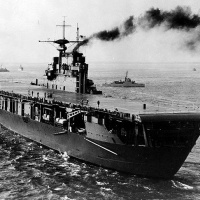
La madrugada del 4 de junio de 1942, sobre las aguas del océano Pacífico, una formación de bombarderos estadounidenses i...

Hace algunos años se popularizó un programa de televisión llamado Alienígenas Ancestrales, cuya premisa central consistí...

El 04 de diciembre del año 2023 se efectuó el lanzamiento de la Estrategia Nacional de Integridad Pública (ENIP), finali...

El anhelo de construir buques en nuestro país, enunciado ya en 1909 por el Almirante Alberto Silva Palma, y plasmado en ...
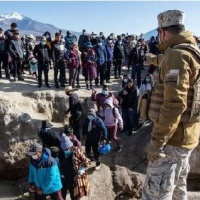
Por estos días un concepto parece resonar con mayor insistencia a como lo hacía en tiempos no tan lejanos. Una demanda p...
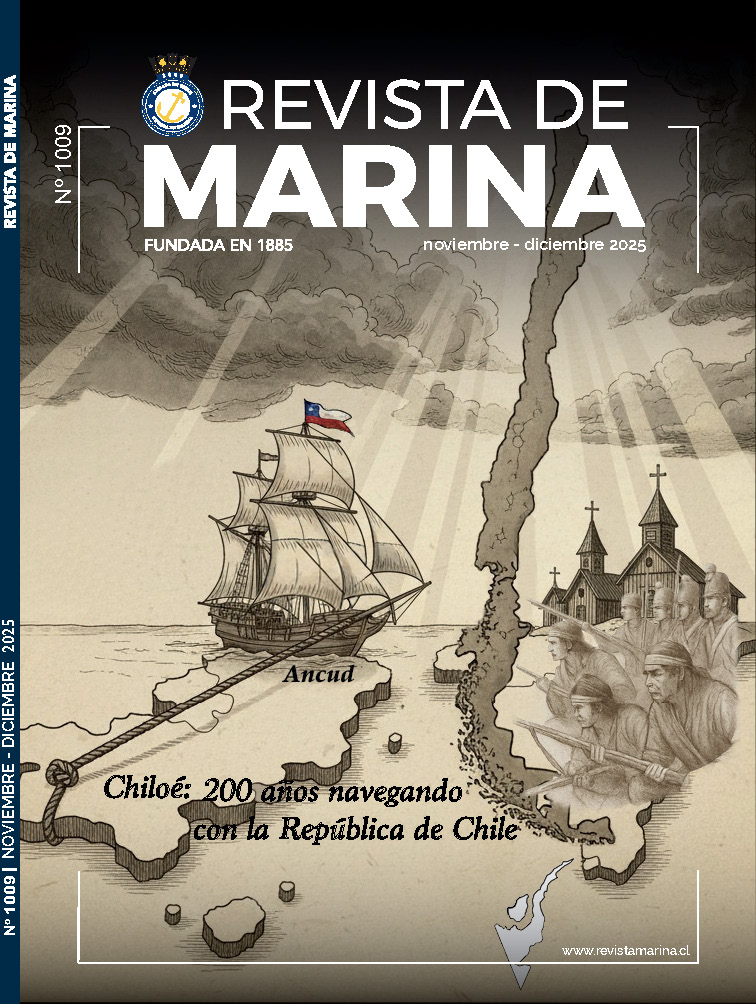
Versión PDF
Año CXXXX, Volumen 143, Número 1009
Noviembre - Diciembre 2025









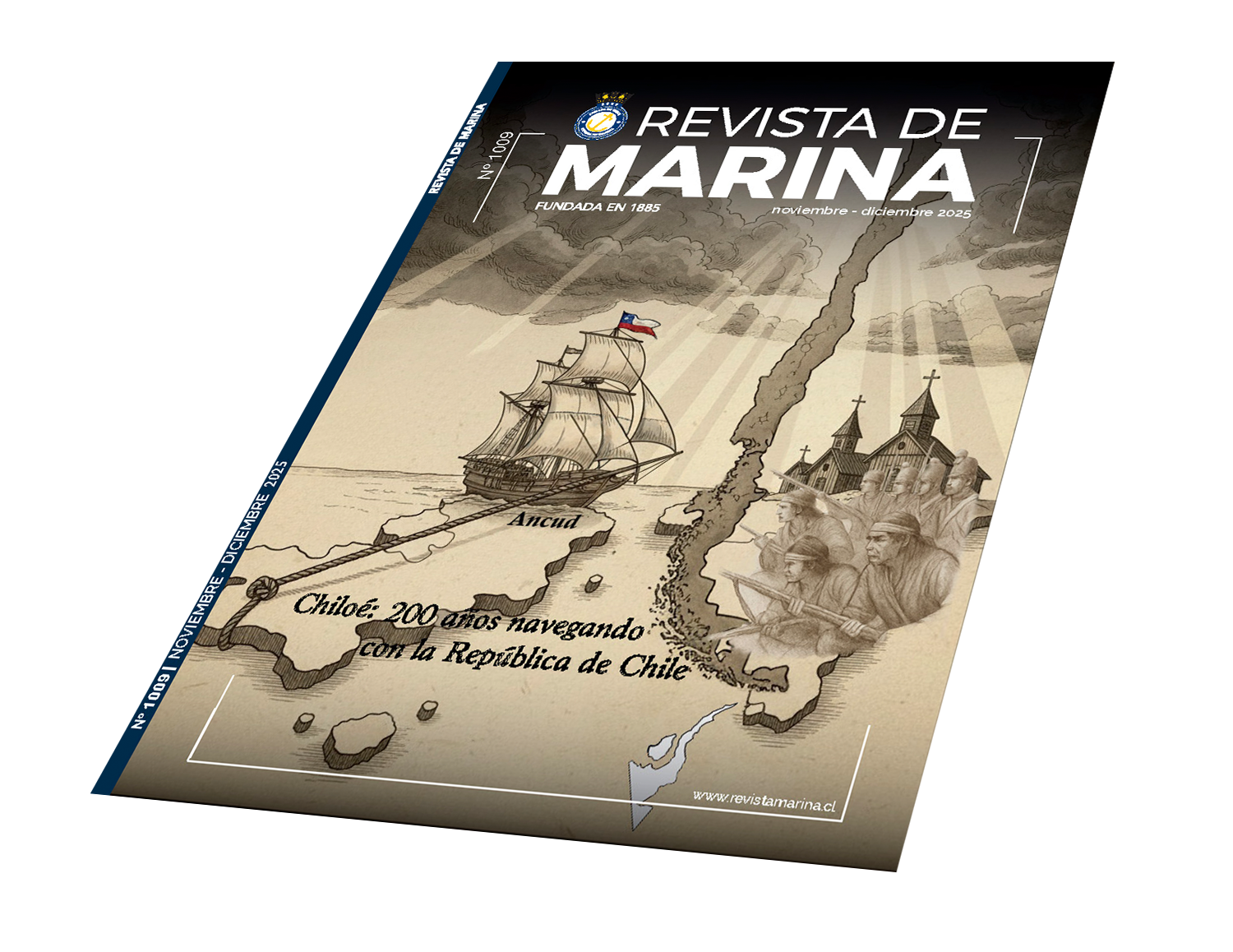
ÚLTIMA EDICIÓN
Noviembre - Diciembre 2025

e-ISSN: 0719-4129
ISSN: 0034-8511
Avda. Jorge Montt N° 2400, Las Salinas,
Viña del Mar.
Teléfono: +56 322 848 905
Casilla 220 Correo Central Valparaíso.
Revista indexada en Latindex 2.0
© 2026 Revista de Marina. Todos los derechos reservados.




Inicie sesión con su cuenta de suscriptor para comentar.-